Winter Dog Care: How to Keep Your Dog Safe and Warm
By the BABYmy dog Team · Retired AKC breeder & U.S. military veteran
April 7, 2026 · Seasonal · 9 min read
Winter changes everything about how we care for our dogs. The season brings hazards that many owners don't think about until it's too late — from road salt burning paw pads to antifreeze poisoning to frostbite on ears and tails. I've lived through harsh winters with dogs of every size and coat type, and I've learned that a little preparation goes a long way toward keeping your dog comfortable and safe when temperatures drop.
Whether you have a thick-coated Siberian Husky who thrives in the cold or a thin-skinned Chihuahua who shivers at 50 degrees, this guide covers what you need to know to get through winter safely.
Cold Weather Dangers Most Owners Overlook
Antifreeze: The Sweet-Smelling Killer
Antifreeze (ethylene glycol) is one of the most dangerous household substances for dogs, and winter is when exposure risk skyrockets. It has a sweet taste that dogs are naturally attracted to, and it only takes a few tablespoons to be lethal for a medium-sized dog. Puddles in driveways, garages, and parking lots are the most common source.
If you suspect your dog has ingested antifreeze, this is a true emergency — get to a veterinary ER immediately. Treatment must begin within hours to prevent irreversible kidney damage. At home, switch to propylene glycol-based antifreeze, which is significantly less toxic. Clean up any spills immediately and keep containers stored where your dog can't access them.
Road Salt and Chemical De-Icers
Road salt and chemical de-icers are everywhere in winter, and they cause two problems for dogs. First, they irritate and burn paw pads on contact, causing redness, cracking, and pain. Second, dogs lick their paws after walks, ingesting these chemicals — which can cause vomiting, diarrhea, and in large amounts, more serious toxicity.
The fix is simple: wipe your dog's paws with a warm, damp towel after every winter walk. Get between the toes and pads thoroughly. If your dog tolerates them, paw wax or dog boots provide a barrier that prevents salt from contacting the skin at all. For your own property, use pet-safe ice melt products that are chloride-free.
Which Dogs Need Winter Coats?
Not every dog needs a coat, and some dogs genuinely don't want one. But certain dogs absolutely need outerwear when temperatures drop below freezing:
- Small breeds — Chihuahuas, Italian Greyhounds, Miniature Pinschers, Yorkshire Terriers, and similar small dogs have high surface-area-to-body-mass ratios, which means they lose heat fast.
- Single-coated breeds — Greyhounds, Whippets, Boxers, Vizslas, and Dalmatians lack the insulating undercoat that double-coated breeds have. They get cold quickly.
- Senior dogs — Older dogs regulate body temperature less efficiently and often have arthritis that worsens in cold weather. A coat provides both warmth and comfort.
- Very lean dogs — Dogs with low body fat have less natural insulation. Sighthounds are the classic example.
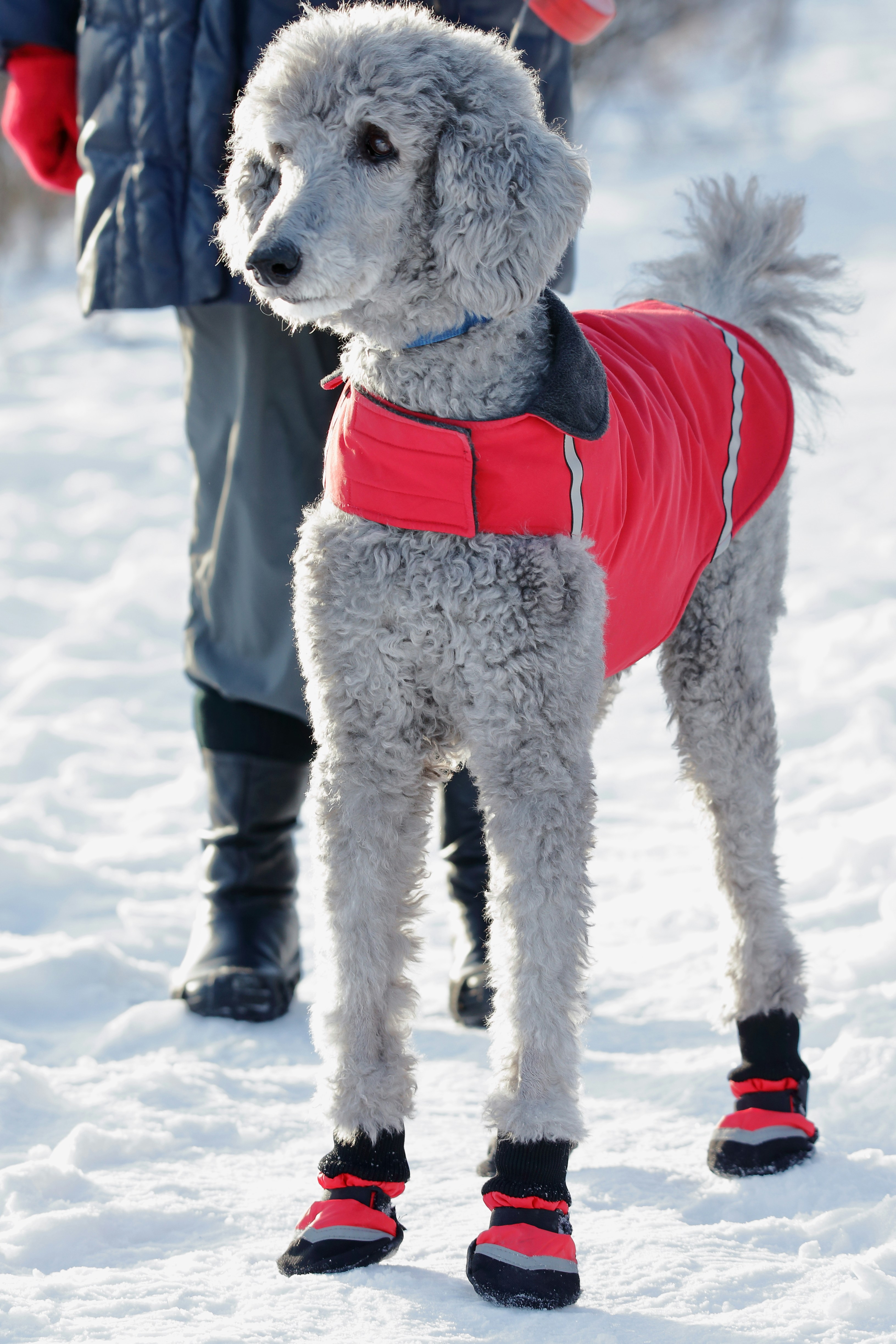
- Dogs with clipped coats — Poodles, Bichon Frises, and other breeds that are typically groomed short may need a coat in winter even though their full natural coat would provide adequate protection.
Breeds with thick double coats — Siberian Huskies, Malamutes, Bernese Mountain Dogs, Newfoundlands — generally don't need coats and may actually overheat in one. These breeds were literally built for cold weather.
Best Winter Gear for Dogs
When it comes to winter coats, fit matters more than brand. A coat that's too loose will shift and bunch, leaving areas exposed. One that's too tight restricts movement and can cause chafing. You want a coat that covers from the base of the neck to the base of the tail, wraps around the chest and belly, and allows full range of motion in the legs.
The Kurgo Loft Dog Jacketis my top recommendation for most dogs. It's waterproof, reversible, has a reflective trim for visibility on dark winter evenings, and the sizing runs true across breeds. I've used it on everything from a 15-pound Boston Terrier to an 80-pound Lab mix, and the fit has been excellent across the board. It's also machine washable, which is a necessity when your dog is tromping through mud and slush.
For dogs who need heavier insulation — especially lean breeds spending extended time outdoors — the Ruffwear Quinzee Insulated Jacket is the premium choice. It uses synthetic insulation that retains warmth even when wet, has a built-in harness port, and is designed for active outdoor dogs. It's pricier than the Kurgo, but for dogs who spend a lot of time in genuinely cold conditions, it's worth the investment. Check out our full best dog coats guide for more options at every price point.
Paw Protection Strategies
Your dog's paws take the brunt of winter conditions. Ice, snow, salt, and cold pavement can all cause damage ranging from minor dryness to painful cracks and bleeding. Here's how to protect them:
Paw balm or wax creates a protective barrier on paw pads before walks. Apply it like chapstick to the pads and between the toes. Products with beeswax and shea butter work well. Reapply before each walk during salt season.
Dog bootsprovide the most complete protection but require some acclimation. Most dogs find boots weird at first and do the classic high-stepping "astronaut walk." Start by having them wear boots indoors for short periods with treats and praise. Most dogs adjust within a week. Look for boots with rubber soles for traction on ice and velcro straps that actually stay on — cheap boots that fall off every ten steps are worse than no boots at all.
Fur trimmingbetween the toes prevents ice balls from forming. Dogs with feathered feet — Golden Retrievers, Setters, Spaniels — are especially prone to ice accumulating between their toes, which can be very painful. A quick trim with rounded-tip scissors or a groomer visit keeps this in check.
Recognizing Hypothermia and Frostbite
Dogs can develop hypothermia and frostbite just like humans, and small or thin-coated breeds are especially vulnerable. Know the warning signs:
Early hypothermia signs: Shivering, reluctance to walk, seeking warm places, curling into a tight ball. These are your cues to get inside immediately.
Advanced hypothermia signs: Lethargy, muscle stiffness, shallow breathing, dilated pupils. This is a veterinary emergency. Warm your dog gradually with blankets (not a hair dryer or heating pad, which can cause burns) and get to a vet.
Frostbitemost commonly affects ear tips, tails, and paw pads. Affected skin appears pale, gray, or blue and feels cold and hard to the touch. As it warms, the area becomes red, swollen, and painful. Do not rub or massage frostbitten areas — this causes more tissue damage. Warm the area slowly with lukewarm (not hot) water and contact your vet.
Indoor Exercise Ideas for Cabin Fever Days
When it's too cold or icy to walk safely, your dog still needs physical and mental stimulation. Here are ways to burn energy without leaving the house:
- Staircase fetch: If you have stairs, toss a ball up and let your dog sprint up and down. Five minutes of this is equivalent to a 20-minute walk in terms of energy expenditure.
- Tug-of-war: An excellent full-body workout that most dogs love. Let them win sometimes to keep it fun.
- Puzzle feeders and snuffle mats: Mental stimulation tires dogs out just as effectively as physical exercise. Scatter kibble in a snuffle mat and let your dog work for their meal.
- Indoor obedience practice: Use the downtime to sharpen commands. Short five-minute training sessions throughout the day keep your dog engaged and mentally sharp.
- Hide and seek: Have someone hold your dog while you hide, then call them to find you. Most dogs think this is the best game ever invented.
Final Thoughts
Winter doesn't have to be miserable for your dog. With the right gear, awareness of cold weather hazards, and some creative indoor activities, you can keep your dog safe, warm, and entertained until spring arrives. The most important thing is knowing your individual dog's cold tolerance — a Husky and a Greyhound have wildly different needs, and treating them the same could mean one is overheated while the other is dangerously cold.
Pay attention to your dog's behavior in cold weather. They'll tell you when they're uncomfortable if you know what to look for. And when in doubt, bring them inside. No walk is worth risking your dog's health. Stay warm out there.